How They’re Gaslighting You About the Stock Market
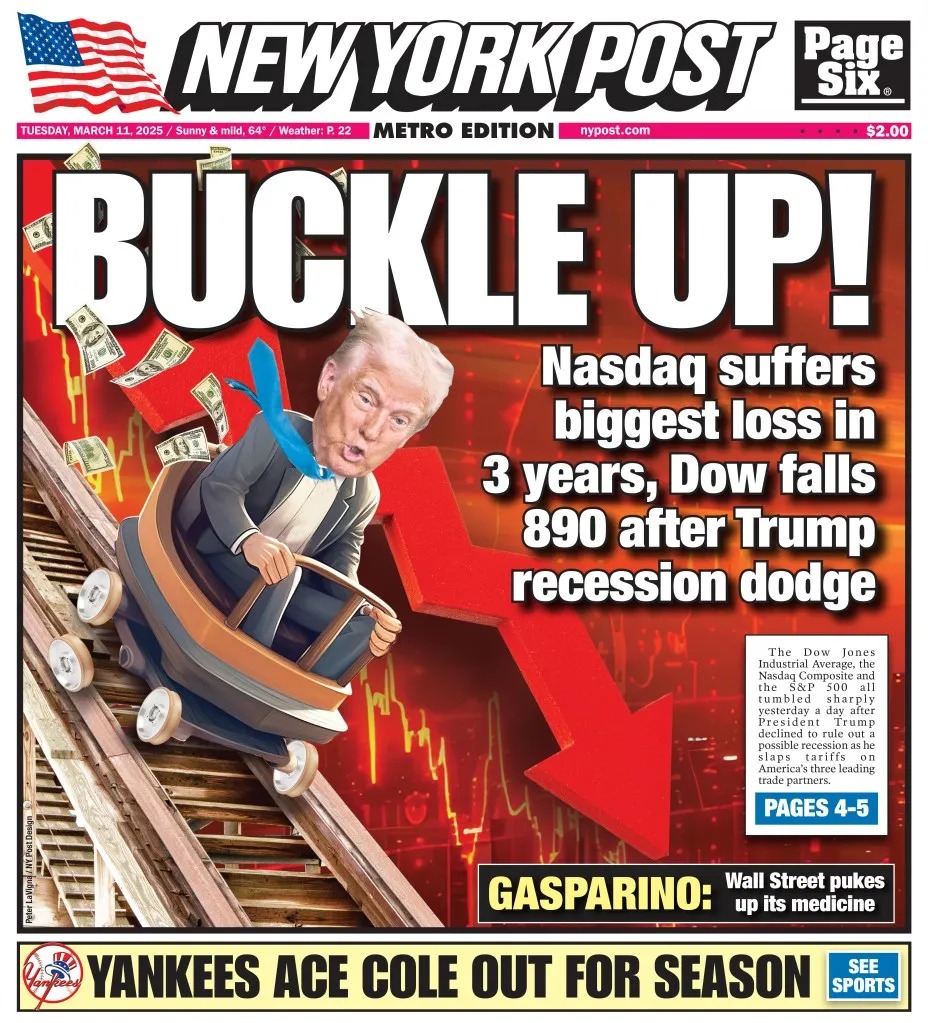
If you want a masterclass in spin, look no further than today’s New York Post cover. The hard facts are all there—Nasdaq just had its worst drop in three years, the Dow plunged 890 points, and Trump’s trade war is fueling the sell-off. But that’s not the story they want you to read.
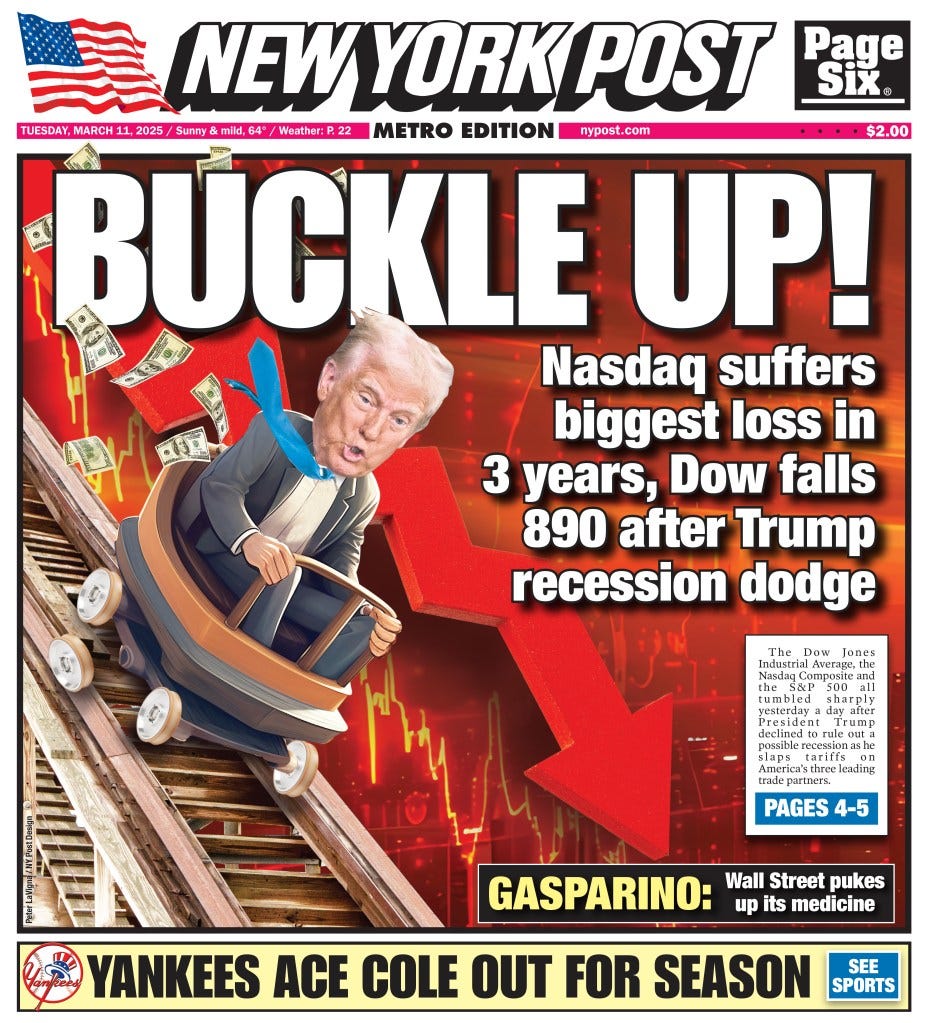
Instead, tucked in a corner, we get: “Wall Street pukes up its medicine.” First off, gross. Second, that tiny phrase carries the entire conservative argument: Wall Street isn’t crashing—it’s healing. Trump isn’t tanking the market—he’s fixing it. This isn’t a crisis—it’s a detox.
It’s nonsense. But it’s calculated nonsense. Here’s how they craft the lie.
Step 1: Appeal to Base Emotions
Market turmoil? Nothing to see here! That’s not just the message Trump wants you to hear—it’s the one his supporters want to believe.
MAGA voters want to believe they picked the right guy. That he has their backs. That he’s putting them first. The stock market crashing under Trump shatters that illusion. So, instead of reckoning with reality, conservative media gives them permission to live in denial.
Step 2: Create a Boogeyman

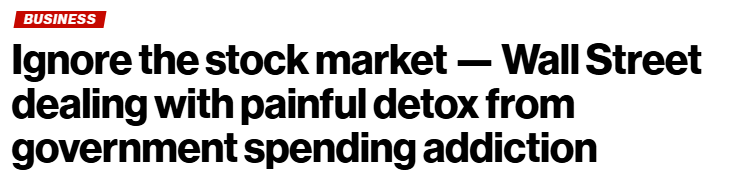
The column repeatedly calls Wall Street investors “fat cats.” This is deliberate. It’s not just dismissive—it’s an attempt to make people hate the very thing that signals economic health.
The message? Who cares if Wall Street is hurting? Those rich snobs had it coming. But here’s the truth: The stock market isn’t just a playground for the rich. Millions of middle-class Americans have their retirement savings, pensions, and investments tied to it. When markets drop, real people suffer. Telling Americans to “ignore” their shrinking 401(k)s isn’t just bad advice—it’s an insult.
Step 3: Use an Unhinged Analogy

The article hits peak absurdity with this one: The U.S. economy is like a heroin addict in withdrawal. Government spending, it claims, was the “drug,” and now we’re in “detox” under Trump.
This isn’t just a bad analogy—it’s gaslighting. It suggests that economic pain is necessary and good—that struggling is proof the system is working. But here’s the thing: A healthy economy doesn’t need to suffer to thrive. Investors aren’t panicking because they’re addicted to “easy money”—they’re reacting to real instability caused by reckless policy and uncertainty.
Step 4: Mock Any Legitimate Concern as Hysteria

Worried about tariffs wrecking trade? You’re just crying about “economic Armageddon.” Concerned that a stock market crash signals deeper problems? Stop being so dramatic.
This is a classic strawman tactic: Take a reasonable argument, exaggerate it into something ridiculous, then mock it. The reality? Tariff wars, erratic policymaking, and fiscal chaos have consequences. Pretending they don’t doesn’t make them disappear—it just ensures people aren’t prepared for the fallout.
Step 5: Shift the Blame

Naturally, the piece doesn’t waste time before blaming Biden. The argument? Trump inherited a mess because “Sleepy Joe” spent too much money we “didn’t have.”
Let’s talk about actual history: Trump’s administration ballooned the deficit before the pandemic hit. But acknowledging that would ruin the narrative, so instead, we get a carefully curated history lesson designed to pin everything on Biden.
Step 6: Slip in Some Evidence-Free Propaganda

Then comes the wildest claim of all:
The Trump people tell me Biden injected as much as $250 billion into the economy in his final months to get Kamala Harris elected.
No second source. No data. Just a vague, conspiratorial assertion meant to sound scandalous without actually proving anything.
This is a classic political trick: Float an accusation with no proof, let it fester, and move on before anyone asks questions. It’s not journalism—it’s propaganda.
Step 7: Throw in a Token Criticism for Fake Credibility

Near the end, the columnist briefly admits that Trump’s team “isn’t doing themselves any favors” by constantly talking about tariffs. This minor critique gives the illusion of balance—but the larger argument stays intact.
It’s a weak attempt at objectivity. Don’t fall for it.
The Bottom Line: They Don’t Want You to Pay Attention
The stock market isn’t just some abstract numbers game—it’s a real-time reflection of economic confidence. When it tanks, it affects businesses, wages, and retirement savings.
The people pushing the “just ignore it” narrative aren’t trying to protect you from unnecessary worry. They’re trying to protect themselves from accountability.
The real question isn’t whether we should be paying attention—it’s why they’re so desperate for us to look away.
Post a comment