Junk Food's Biggest Foe
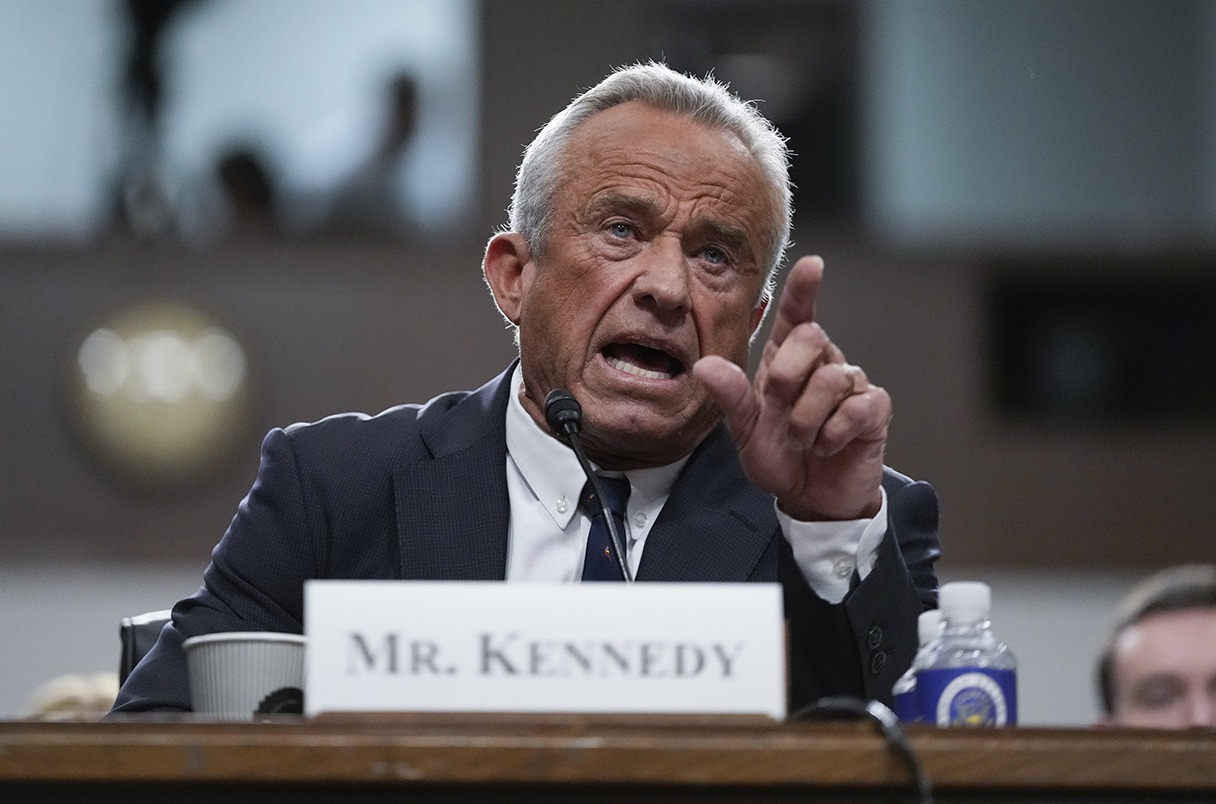
A bead of sweat ran down Robert F. Kennedy Jr.’s face as he sat before the Senate Finance Committee. The personification of a riddle wrapped in a mystery inside an enigma, Kennedy occupies a unique place in the discourse. He has served as a public servant, corporate mercenary, brain-dead megaphone, and personal hypocrisy. And he’s shouldered it all with an entitlement reserved only for the highest echelons of the American elite.
In that moment, Kennedy was vying for a new title: Secretary of Health and Human Services. A $ 1.7 trillion budget was on the line - along with the power to control the nation's health. His voice rasped as he struggled through his spasmodic dysphonia. His hands trembled. When he finished his opening statement, he sighed with relief.
Then, the Democrats on the committee launched into questions. Over the next three hours, Kennedy slowly devolved. He shook, sputtered, and shouted. He failed to deflect from his decades of anti-vaccine advocacy. He couldn’t justify his shifting stance on abortion. He didn’t know basic information about Medicare and Medicaid. And the entire scene was broadcast live to millions of Americans.
I watched the car crash from the control room at Fox News headquarters in New York City. I felt the room bristling at Kennedy’s performance. In the harsh glow of dozens of screens, I could see the wheels turning in our heads. How do we spin this disaster? But I suspect my fellow news producers had little sympathy for Kennedy. It was great TV.
The Republican senators seemed even less stressed than their allies in the newsroom. They looked unfazed by Kennedy’s blatant failings. In fact, they didn’t touch the topics above. Instead, they shifted the conversation to something more palatable - the food industry. A few outright praised Kennedy for his “Make America Healthy Again” (MAHA) agenda.
Kennedy reveled in these brief reprieves and delivered a laundry list of promises. He would use the National Institutes of Health to conduct more research on food additives. He would work closely with the U.S. Department of Agriculture to examine federally funded school lunch programs, as well as food assistance for low-income individuals. And he wouldn’t outright ban certain foods.
“I don’t want to take food away from anybody,” Kennedy told the committee. “If you like a cheeseburger, a McDonald’s cheeseburger, and a Diet Coke like my boss, you should be able to get them.”
Kennedy’s deflection, aided by softball questions, worked. Despite his poor showing, the committee advanced his nomination to the Senate floor. The deciding vote was cast by Bill Cassidy, a doctor who had practiced for 30 years before running for office. He said afterward that, while initially skeptical of Kennedy, he received “serious commitments” from the Trump administration in exchange for his support.
On February 13, the Senate voted 52-48 to confirm Kennedy. Only one Republican, Mitch McConnell of Kentucky, joined Democrats in opposing him. McConnell said in a statement that Kennedy "failed to prove he is the best possible person" for the post, while citing his record on vaccines. McConnell is a survivor of childhood polio.
Once seen as a fringe figure, Kennedy has leveraged his MAHA platform into an unlikely position of power. To understand his trajectory, we have to go back. Not to his nomination or his failed presidential campaign, or even his history as an anti-vaccine advocate. Instead, we begin on a plane.
In September 1983, Robert F. Kennedy Jr. was flying to Rapid City, South Dakota, when he suddenly fell ill. The pilot radioed ahead for medics. On account of his last name, the 29-year-old was escorted to a VIP room at the airport. Then, investigators found heroin in his luggage.
This incident followed a bad summer for Kennedy. Two months prior, he resigned from the Manhattan District Attorney's Office. Kennedy had landed a prestigious job as an ADA after graduating from the University of Virginia Law School. He left after less than a year, having failed the New York bar exam.
Two days after the plane episode, Kennedy checked himself into a New Jersey drug treatment center. By his own account, he started using heroin at age 15, as he struggled to cope with the assassination of his father. He says his stint in rehab ended those 14 years of drug addiction.
Kennedy pleaded guilty to a felony charge of heroin possession. He was sentenced to two years of probation and community service. To satisfy these conditions, he volunteered for the National Resources Defense Council. This experience launched his career as an environmental lawyer and nonprofit executive.
Kennedy casts his life as a redemption story. During his renegade presidential campaign, he told a conservative Christian radio host that he had been an addicted and troubled young man. However, he had undergone a “spiritual awakening” and “knew he had to change in a deep, fundamental way.”
Kennedy’s close friends and supporters told the New York Times that they see him as a “revolutionary, speaking truth to power.” They note that recovery has made him disciplined and focused. He adheres to a strict diet and exercise routine. He still attends 12-step meetings more than 40 years after that flight to South Dakota.
On the campaign trail, Kennedy touted his health and relative youth as he faced off against Donald Trump and Joe Biden - the two oldest presidential candidates in U.S. history. He skied with a professional snowboarder and an Olympic gold medalist. A camera crew filmed him lifting weights shirtless on Venice Beach.
Kennedy did claim he suffered from severe short and long-term memory loss, as well as mental fog, during his 2012 divorce. In a court deposition, he attributed his neurological issues to "a worm that got into my brain and ate a portion of it and then died", in addition to mercury poisoning from eating large quantities of tuna. Consequently, the judge lowered his alimony payments. During the campaign, Kennedy refused to release medical records confirming these diagnoses.
As for his troubled past, Kennedy made light of these numerous red flags. In his announcement speech for his presidential bid, he said, “I got so many skeletons in my closet that if they could vote, I could be king of the world.” Unfortunately for Kennedy, they can’t.
By August 2024, his campaign was over. Kennedy was facing declining poll numbers, limited campaign funds, and increasing challenges to ballot access. Defeated, he offered the Harris and Trump campaigns his endorsement in exchange for a cabinet position. Harris reportedly rebuffed him. But Trump didn’t. After weeks of back-channel courtship, Kennedy dropped out and threw his support behind the future President.
Kennedy may have failed to convince voters of his about-turn, but he did convince the leader of the free world. Minutes after Kennedy was sworn in, Trump signed Executive Order 14211, which ordered the creation of a “Make America Healthy Again” Commission, with Kennedy at the helm. Its objectives included investigating the incidence and causes of chronic childhood diseases and assessing the threat of psychiatric and weight-loss drugs.
As HHS Secretary, Kennedy has turned his attention to reshaping federal food policy. In May, the MAHA Commission released its first report, declaring that the U.S. diet has “shifted dramatically toward ultra-processed foods,” and “nearly 70% of children’s calories now come from UPFs, contributing to obesity, diabetes, and other chronic conditions.”
At Kennedy’s direction, the FDA asked food manufacturers to voluntarily phase out six widely used artificial dyes. Two others have been outright banned. He also ordered the agency to look into ways to close the long-criticized “Generally Recognized as Safe” loophole. GRAS is a distinction that allows food companies to self-certify new additives without independent safety testing or public notification.
The same month, the FDA and NIH jointly launched a new Nutrition Regulatory Science Program. The FDA says the goal is “to advance the gold standard of nutrition and food science.” The agencies say their first focus is understanding how ultra-processed foods affect metabolic and mental health, and what role certain additives may play in chronic inflammation, neurological dysfunction, and addiction.
To me, many of these proposals sounded promising. As someone who, like Kennedy, suffers from co-occurring mental illness and substance use disorder, and as a skeptic of Big Food, I was hopeful. But I’m not naive. I patiently waited to see what actions would accompany his talk.
Then, Kennedy began encouraging states to restrict the Supplemental Nutrition Assistance Program (SNAP), formerly known as food stamps. He suggested policies to ban the purchase of candy, soda, or both with government benefits. He even appeared onstage with red state governors as they announced their plans. So far, 12 states have passed or are considering a ban.
Critics of the SNAP restrictions have called these exclusions both paternalistic and punitive. Supporters argue it's a long-overdue reform to promote Americans’ health. The fight is already playing out in state legislatures and conservative media, often with images of soda-filled shopping carts and headless fat people.
Kennedy’s star power was divisive, but, at the time, his message was landing. A June 2025 NBC News Decision Desk poll found that a majority of Democrats hold a "strongly unfavorable" opinion of him. A slim majority of Republicans view him "somewhat favorably.”
However, when the same poll asked what deserves the most blame for America’s chronic health problems, the most popular answer, at 35%, was the food industry. This result cuts across party lines, suggesting a deep, bipartisan distrust of the corporations that produce our food. While Americans are divided on Kennedy as the messenger, they find surprising consensus in his message.
Running a close second in the poll was the choice of individuals, at 32%. This finding shows the enduring power of the personal responsibility narrative- the belief that health is primarily a matter of individual willpower.
Trailing significantly behind was socioeconomic status (12%), despite overwhelming evidence of the link between poverty and poor health. According to the CDC, for instance, obesity prevalence among adults in the lowest-income households is nearly 10 percentage points higher than in the highest-income group.
The language of food reform is increasingly being used to promote two very different agendas: one that seeks to regulate industry and one that seeks to police the behavior of individuals. In this way, “ultra-processed food” has become a proxy for old debates about discipline, dependence, and deservedness. What looks like a public health concern can easily become a pretext for cutting aid.
As someone recovering from substance abuse and trauma, Kennedy might be assumed to be a crusader for addicts, the mentally ill, and other sufferers. His privilege to access treatment is what he attributes to his success. So, one might think he’d want to give the same resources to those less fortunate than himself. So far, he does not.
Before we can decide what to do about ultra-processed food, we need to know how it came to dominate global diets. In the next part, we’ll dig into the history of processed food proliferation - starting not in a kitchen, but in a lab.
Post a comment