Brazil As Ground Zero
Around 1972, Carlos Monteiro and his fellow medical residents ventured to Vale do Ribeira, an underdeveloped region in southern Brazil. The area suffered from severe undernutrition and lacked established primary healthcare. So, Monteiro and his peers went to study the conditions and educate the locals. They initiated a teacher training program and provided them with basic health and nutrition information. Soon, their grassroots approach to community medicine was finding success.
Then, during the late 1970s, political turmoil under Brazil’s military dictatorship restricted their movements, especially towards places that faced significant guerrilla activity. Consequently, Monteiro went to São Paulo. He transitioned into an academic role in the nutrition department at the School of Public Health.
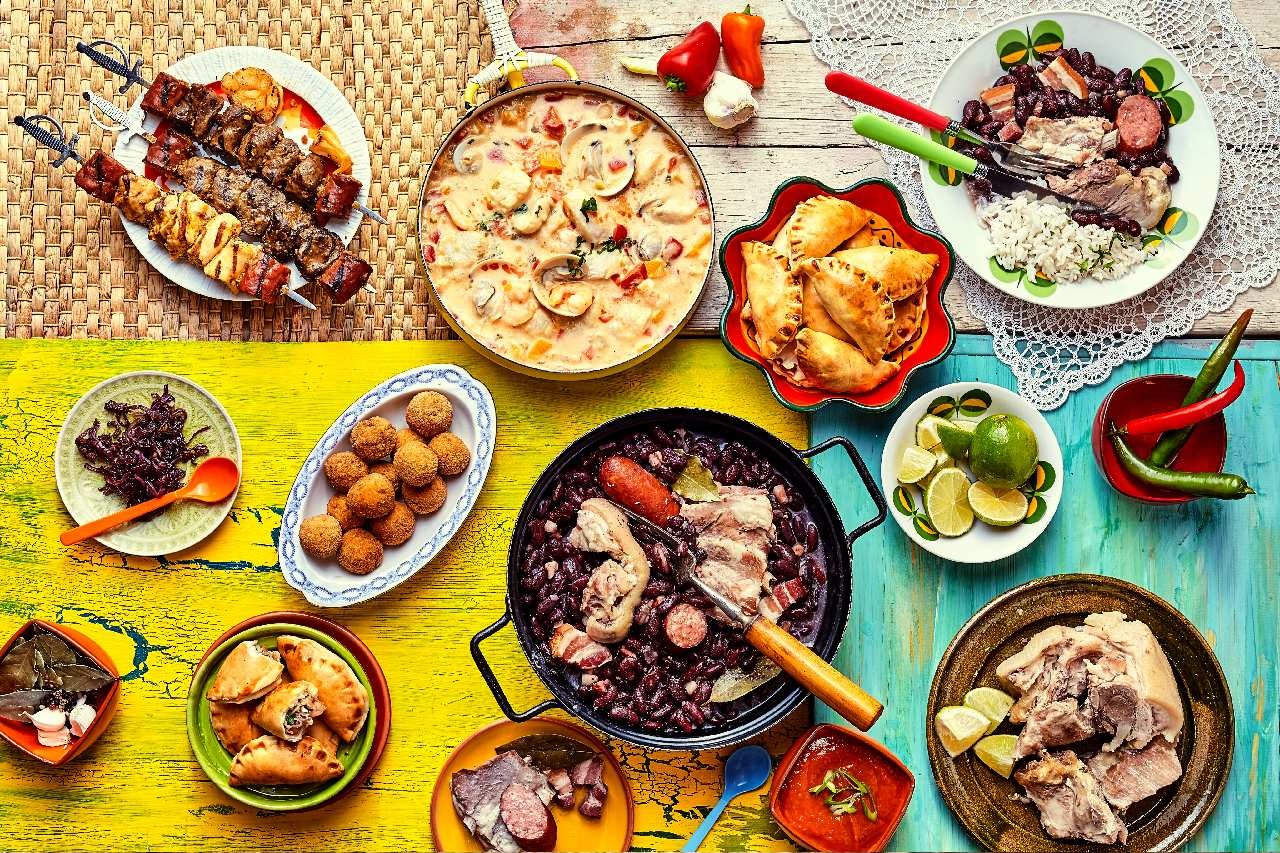
When Montiero arrived in Brazil’s most populous city, the smell of feijão and rice wafted from apartment windows at dinnertime. Corner bakeries sold crusty rolls at dawn. Schoolchildren carried metal lunch tins packed by hand.
However, over the next decade, the streets changed. Global logos flashed from every bus stop. Vendors hawked foil-wrapped snacks and plastic bottles. Bright boxes of powdered chocolate milk, instant noodles, and frozen chicken patties crept into grocery carts that once held beans, cassava, and fresh produce.
Monteiro turned his academic focus to the nutritional transition in Brazil. He documented a dramatic shift - from undernutrition to obesity. Broadly speaking, this change corresponded with economic development, increased levels and distribution of income, and urbanization.
In the early 1990s, Brazil adopted economic “shock therapy.” It slashed tariffs, cut government food subsidies, and opened its markets to foreign capital. This unleashed a flood of investment from multinational corporations. Nestlé, PepsiCo, Kraft, Unilever, and Coca-Cola weren’t just selling food. They were rewriting the script of what a Brazilian meal looked like, tasted like, and cost.
Between 1996 and 2006, Brazil experienced significant advances in income distribution along with expansions in education, health services, and infrastructure. Monteiro observed how the country’s health mapped onto broader developmental policies that enhanced access to public services for the poor. His studies indicated that improvements in maternal education were pivotal, followed by income growth, improved access to nutrition, and better sanitation.
At the same time, as formerly marginalized communities were brought into the market, they gained access to different types of foods. While historically, individuals in those communities might have lacked any food, they now faced an abundance of cheap, readily available ultra-processed foods. The consumption of sugary soft drinks also increased, supported by aggressive marketing from the beverage industry.
A new class of workers - commuting long hours by bus or train, working longer days in newly deregulated labor markets - needed food that could be eaten quickly, anywhere. Enter the individually wrapped cake, the instant soup packet, and the sugary yogurt drink. Time, not tradition, was the new currency of food culture.
The fallout was swift. Starting in 2006, studies showed about one million new cases of adult obesity per year. In clinics from Rio to Recife, doctors began seeing overweight toddlers and hypertensive teenagers. One pediatrician in Belo Horizonte, quoted in The New York Times, said she used to treat malnourished children. Now, she was treating kids who were overfed and undernourished at the same time.
It would be easy to paint this as a uniquely Brazilian tragedy. But the truth is, the story sounds familiar to anyone who’s walked into a bodega in the Bronx, a corner store in Detroit, or a vending machine-lined hallway of an American psych ward. Processed food doesn’t just arrive where poverty is. It multiplies there. It becomes the norm. And then, it becomes invisible.
The changes in Brazil prompted Monteiro to investigate dietary changes over time, particularly focusing on the increasing consumption of processed foods. He used data from household purchase surveys to get detailed information on eating habits. These surveys helped him identify a shift from traditional staple foods like rice and beans to more processed products such as soft drinks, snacks, and instant noodles. Over time, he incorporated more direct measures of food intake, such as 24-hour dietary recalls, which provide a more accurate picture of what people are actually consuming.
In 2009, Monteiro published a paper titled “The issue is not food, nor nutrients, so much as processing.” In it, he proposed a simple but revolutionary idea: nutrition science needed to stop focusing so narrowly on sugar, salt, and fat. Instead, it must consider the level of processing that the food underwent. He introduced a classification system to differentiate foods called NOVA.
Monteiro’s real concern wasn’t just that these foods were unhealthy. It was that they were designed to be addictive. Hyper-palatable. Convenient. Ubiquitous. And increasingly, they were becoming the default, not the exception, in global diets.
His work landed like a bomb in the nutrition world. It challenged the food pyramid. It called out the World Health Organization. It directly accused Big Food of driving a global health crisis. And it suggested that the answer wasn’t just eating less sugar, but questioning why so many people around the world were being offered so little else.
Monteiro’s critics called his system too vague, too moralizing, and too anti-science. But his defenders, especially among public health advocates in Latin America, saw something different: a language for naming what they were living through. A way to make the invisible visible.
For those of us in recovery, his framework offers something else, too: a lens for understanding why ultra-processed foods feel so hard to resist. Like drugs, they’re engineered to bypass the body’s natural regulatory systems. They hijack taste, hunger, and dopamine. And just like with substances, it’s not a lack of discipline that makes them hard to quit. It’s their design.
Monteiro didn’t set out to become a food revolutionary. But in naming the system, he gave people around the world - researchers, parents, policy makers, and patients - a way to begin resisting it.
Before we can decide what to do about ultra-processed food, we need to define it. That’s harder than it sounds. Is all store-bought bread equally bad? What about protein bars? Or tofu? In the next part, we’ll dig into the NOVA classification system and explore what makes an ultra-processed food different.
We’ll also ask a more urgent question: Why does this category matter so much more for people already struggling with their mental health and addiction, and what happens when choice isn’t really a choice at all?
Post a comment